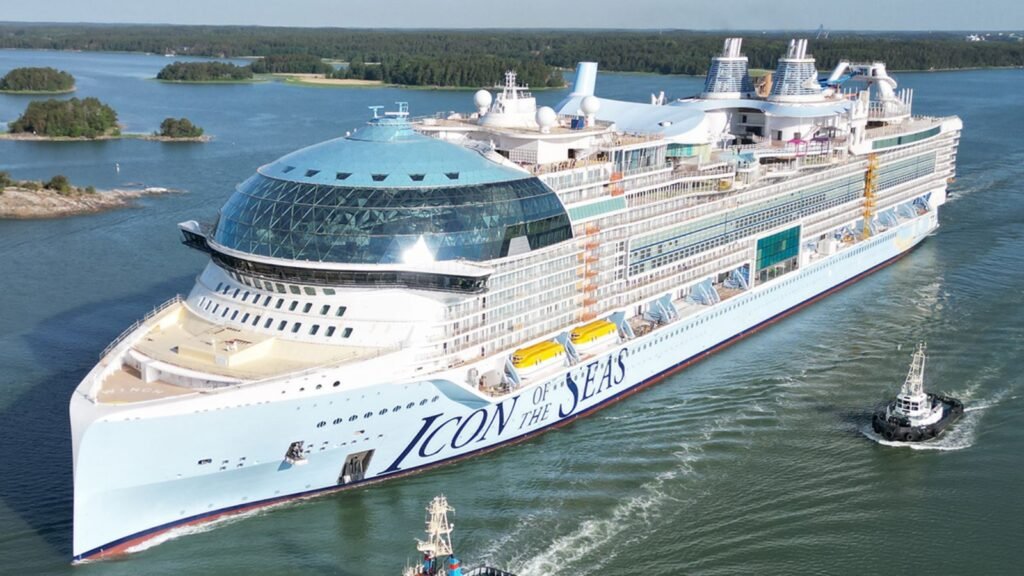
The modern cruise industry has transformed dramatically over the past few decades. What were once modest passenger vessels have evolved into floating cities packed with entertainment, luxury, and cutting-edge technology. Among these giants, one ship stands above the rest: the Icon of the Seas, currently recognized as the biggest cruise ship in the world.
But what exactly makes a cruise ship “the biggest”? And how did ships reach such astonishing sizes? This article dives deep into the world of mega cruise liners, focusing on the record-breaking Icon of the Seas and the evolution of these maritime marvels.
What Defines the “Biggest” Cruise Ship?
Before identifying the largest cruise ship, it’s important to understand how size is measured. Cruise ships are typically ranked by gross tonnage (GT), which reflects the total internal volume of the ship rather than its weight.
Gross tonnage includes all enclosed spaces—from cabins and restaurants to theaters and engine rooms. Today’s largest ships exceed 200,000 GT, making them more than five times larger than historic vessels like the Titanic.
Other factors also contribute to a ship’s “bigness,” including:
- Passenger capacity
- Length and height
- Number of decks
- Onboard facilities
However, gross tonnage remains the primary benchmark for determining the world’s biggest cruise ship.
The Current Record Holder: Icon of the Seas
The title of the world’s largest cruise ship belongs to the Icon of the Seas, operated by Royal Caribbean International. Launched in 2024, this ship represents a new generation of cruise design and engineering.
Here are some of its staggering specifications:
- Gross tonnage: حوالي 250,000 GT
- Length: Approximately 365 meters (1,198 feet)
- Passenger capacity: Around 5,600 guests (up to 7,600 at maximum occupancy)
- Crew members: Over 2,000
In total, the ship can carry nearly 10,000 people, making it feel more like a floating city than a traditional vessel.
A Floating City: Features and Attractions
What truly sets the Icon of the Seas apart is not just its size, but the incredible variety of experiences it offers onboard. Modern cruise ships are designed to be destinations in themselves, and this ship takes that concept to the extreme.
Some of its standout features include:
- The largest waterpark at sea, with multiple high-speed slides
- Seven swimming pools, including one of the biggest ever built on a ship
- Eight themed “neighborhoods”, each offering unique attractions
- Over 40 dining and entertainment venues
- Ice-skating rinks, theaters, and live shows
These features highlight how cruise ships have evolved into multi-purpose resorts that cater to families, couples, and adventure seekers alike.
The Rise of Mega Cruise Ships
The Icon of the Seas didn’t emerge overnight—it’s the result of decades of innovation and competition within the cruise industry.
In the early 2000s, ships like the Oasis of the Seas and Allure of the Seas pushed boundaries with capacities of over 6,000 passengers. These were followed by even larger vessels such as:
- Wonder of the Seas
- Symphony of the Seas
- Utopia of the Seas
Each new generation introduced bigger designs and more advanced amenities, culminating in the Icon Class of ships.
Today, Royal Caribbean dominates the list of the largest cruise ships, holding most of the top positions globally.
Close Competitors
While Icon of the Seas holds the top spot, it is not alone at the summit. Its sister ship, the Star of the Seas, launched in 2025, matches its size and capacity.
Other major contenders include ships from MSC Cruises, such as:
- MSC World Europa
- MSC World America
These ships are slightly smaller but still enormous, each exceeding 200,000 GT and carrying thousands of passengers.
The competition between cruise lines continues to drive innovation, with each company striving to build bigger and better ships.
Engineering Marvels at Sea
Building a ship like Icon of the Seas is a massive engineering challenge. These vessels require advanced technology, precise design, and years of construction.
Some key innovations include:
- Liquefied Natural Gas (LNG) propulsion, which reduces emissions
- Stabilization systems that minimize motion at sea
- Smart technologies for navigation, safety, and energy efficiency
Shipyards in countries like Finland play a major role in constructing these giants, combining traditional craftsmanship with modern engineering techniques.
Why Build Bigger Ships?
The trend toward larger cruise ships is driven by several factors:
- Economies of scale: Larger ships can carry more passengers, reducing the cost per guest.
- More amenities: Bigger vessels allow for more attractions, improving the overall experience.
- Market demand: Travelers increasingly seek all-in-one vacation experiences.
However, bigger isn’t always better for everyone. Some travelers prefer smaller, more intimate ships that offer personalized service and quieter वातावरण.
Environmental Considerations
As cruise ships grow larger, environmental concerns have also come into focus. Critics argue that mega ships consume vast amounts of fuel and contribute to pollution.
In response, companies like Royal Caribbean and MSC Cruises are investing in cleaner technologies, including LNG fuel systems and energy-efficient designs.
The Icon of the Seas, for example, represents a step toward more sustainable cruising, though debates about the environmental impact of large ships continue.
The Future of Cruise Ships
The race to build the biggest cruise ship is far from over. Royal Caribbean has already announced plans for additional Icon Class vessels, which will match or possibly exceed the size of the current record holder.
Future ships may feature:
- Even larger capacities
- More advanced التكنولوجيا
- Greater focus on sustainability
At the same time, the industry may also explore smaller, eco-friendly ships to balance growth with environmental responsibility.
A New Era of Travel
The rise of ships like Icon of the Seas marks a new era in travel. These vessels are not just modes of transportation—they are destinations in their own right.
Passengers can enjoy everything from fine dining and Broadway-style shows to thrilling water rides and serene spa experiences, all without leaving the ship.
This transformation has made cruising one of the fastest-growing sectors in global tourism.
Conclusion
So, what is the biggest cruise ship in the world? As of 2026, the answer is the Icon of the Seas—a record-breaking vessel that redefines what is possible on the ocean.
With its विशाल size, unmatched amenities, and innovative design, it represents the pinnacle of modern cruise engineering. Yet it is also part of a larger trend, as cruise lines continue to push the boundaries of size and luxury.
Whether you view these mega ships as engineering marvels or floating cities, one thing is clear: the world of cruising has entered a new and exciting chapter—and the journey is only just beginning.




Leave a Reply