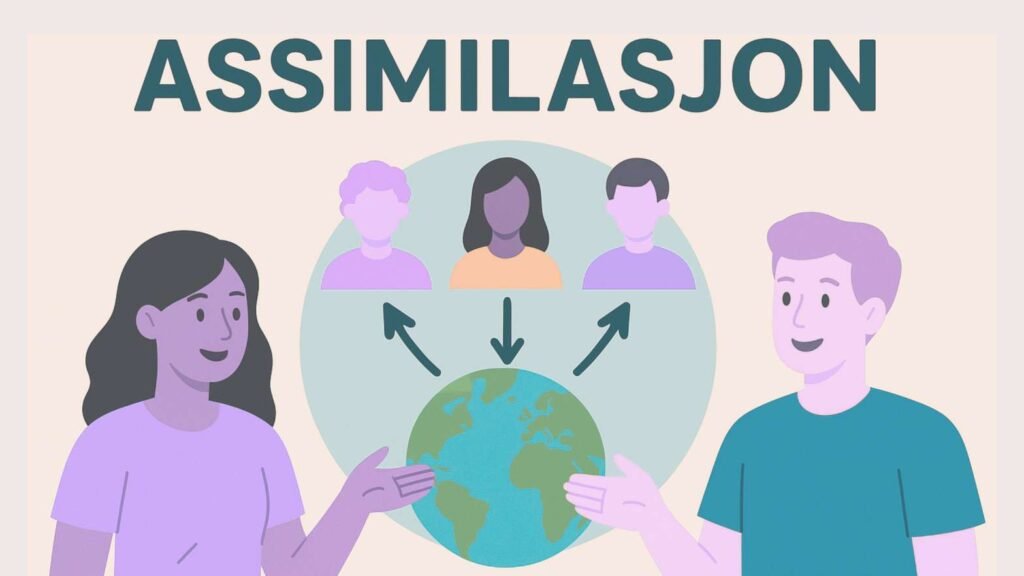

Assimilasjon, commonly translated as assimilation, is a process in which elements adapt or become more alike to their surroundings. The concept spans multiple disciplines, including linguistics, sociology, psychology, and biology. It is observed in the way languages evolve, how societies integrate individuals, and how humans process information. Understanding assimilasjon provides insight into communication, social cohesion, and cognitive development. This article explores assimilasjon in depth, highlighting its mechanisms, examples, and implications.
1. Linguistic Assimilasjon
In linguistics, assimilasjon refers to a phonological process where a sound becomes more similar to a neighboring sound. It occurs naturally in speech to facilitate pronunciation and improve fluency. This phenomenon is universal, appearing in every human language.
Types of Linguistic Assimilation
-
Progressive Assimilation
In progressive assimilation, a sound affects the one that follows it. For instance, in English, the plural dogs is pronounced [dɒɡz], where the [z] sound adapts to the voicing of the preceding [ɡ]. -
Regressive Assimilation
Here, a sound is influenced by the sound that comes after it. For example, the English phrase input is sometimes pronounced [ˈɪmpʊt] in casual speech, where the [n] becomes a bilabial [m] to match the following [p]. -
Reciprocal Assimilation
In reciprocal assimilation, adjacent sounds influence each other mutually, resulting in a blend. Though less frequent, it can occur in rapid speech, contributing to the natural fluidity of conversation. -
Complete vs. Partial Assimilation
-
Complete assimilation: A sound fully changes to match its neighbor. Example: Latin ad portam → apportam.
-
Partial assimilation: Only certain features, such as place of articulation or voicing, change. Example: English have to → [ˈhæf.tə], where [v] changes to [f] because of the following [t].
-
Examples in Everyday Speech
-
Norwegian: det beste → [de ˈbes.te], where [t] at the end of det assimilates with [b] in beste.
-
French: grand homme → [ɡʁɑ̃t‿ɔm], where the nasal [n] in grand adjusts to the vowel starting homme.
-
English: would you → often pronounced [wʊdʒu], showing palatalization of [d] influenced by [j].
Assimilasjon is a natural, unconscious feature of fluent speech, making pronunciation smoother and more efficient.
2. Cultural Assimilasjon
Assimilasjon is also a critical concept in sociology, describing the process through which individuals or groups adopt the norms, values, and practices of a dominant culture. Unlike integration, which allows for cultural diversity within a society, assimilation often implies full adaptation to the prevailing culture.
Forms of Cultural Assimilation
-
Structural Assimilation
Minority groups gain access to social institutions such as schools, workplaces, and political structures. For example, immigrants integrating into the workforce in a new country may adopt professional norms and workplace culture. -
Behavioral Assimilation
This form involves adopting the observable behaviors of the dominant group, including dress, communication styles, and social etiquette. -
Cultural Assimilation
Cultural assimilation involves adopting the traditions, beliefs, and values of the dominant group, often at the expense of one’s original cultural identity. -
Marital Assimilation
Intermarriage between members of different ethnic or cultural groups represents a personal and social dimension of assimilation, potentially blending traditions and familial norms.
Benefits and Challenges
Benefits:
-
Facilitates social cohesion and reduces conflict.
-
Provides opportunities for education, employment, and social mobility.
-
Helps newcomers navigate societal systems efficiently.
Challenges:
-
Risk of losing original cultural identity and heritage.
-
Pressure to conform may lead to psychological stress.
-
Assimilation can be coercive, causing tension between personal identity and societal expectations.
Modern multicultural policies often aim to balance assimilation with integration, encouraging participation in society while preserving cultural diversity.
3. Cognitive Assimilasjon
In psychology, Jean Piaget introduced the concept of assimilation as part of his theory of cognitive development. It describes the process by which individuals incorporate new experiences into existing mental schemas without changing the schema’s structure.
Examples of Cognitive Assimilation
-
A child familiar with dogs sees a wolf for the first time and calls it a “dog,” incorporating the new animal into the existing “dog” schema.
-
Students learning new scientific concepts might relate them to prior knowledge, applying existing frameworks to understand unfamiliar information.
Cognitive assimilation is essential for learning and adaptation, but it is complemented by accommodation, the process of modifying mental schemas to account for new experiences. Together, assimilation and accommodation enable flexible and accurate cognitive development.
4. Assimilasjon in Biology
In biology, assimilasjon refers to the process by which organisms absorb and incorporate nutrients or materials from their environment into their body tissues. It is closely related to metabolism and growth.
-
In humans, food is broken down, absorbed in the digestive system, and assimilated into muscles, organs, and other tissues.
-
In plants, the products of photosynthesis, such as sugars, are assimilated to support growth and reproduction.
Biological assimilation emphasizes the integration and conversion of external resources into internal structures, paralleling the adaptation observed in linguistic and cultural contexts.
5. Assimilasjon vs Integration
While assimilasjon often involves complete adaptation to an external system, integration focuses on coexistence. Key distinctions include:
-
Assimilation: A minority group may adopt the dominant culture fully, sometimes losing original traits.
-
Integration: Individuals participate in society while maintaining aspects of their original identity.
Understanding this distinction is critical in education, immigration policy, and multicultural societies. Promoting integration without enforcing assimilation is generally considered more ethical and socially sustainable.
6. Implications of Assimilasjon
Linguistic Implications
-
Facilitates smoother and faster speech.
-
Leads to language evolution over generations, as new pronunciation norms become standard.
Cultural Implications
-
Can strengthen social cohesion and collective identity.
-
May contribute to the erosion of minority cultures if overemphasized.
-
Encourages cross-cultural understanding when balanced with integration.
Cognitive Implications
-
Enables humans to process new information efficiently.
-
Can cause misclassification if new experiences are incorrectly assimilated into existing schemas.
Biological Implications
-
Essential for survival and growth.
-
Ensures efficient energy conversion and structural maintenance in organisms.
Conclusion
Assimilasjon is a multidimensional concept that reflects adaptation and integration across language, culture, cognition, and biology. Whether smoothing pronunciation, guiding social integration, enabling learning, or supporting physical growth, the process demonstrates how entities interact with and adjust to their environments.
Understanding assimilasjon helps us recognize natural patterns in speech, learning, societal participation, and biological processes. It highlights the balance between adaptation to external influences and the preservation of internal identity, providing insights relevant to linguists, educators, sociologists, and biologists alike.