Introduction
The phrase Rocket explosion today can mean different things depending on the moment, the location, and the source of the report. Sometimes it refers to a launch that failed in the sky. Sometimes it points to an engine test that ended in a fireball on the ground. And sometimes it reflects a rumor that spreads faster than the facts. In today’s coverage, the most immediate report involves a SpaceX engine test at McGregor, Texas, where a blast occurred during Raptor engine testing, with no injuries reported. That kind of event is dramatic, but in aerospace development it is often part of a larger process of testing, learning, and improvement.
The term itself is also a search phrase people use when they want quick answers: What exploded? Was anyone hurt? Was it a launch, a test, or something else entirely? In a fast-moving news cycle, those questions matter. The best way to understand a rocket incident is to separate the visible fireball from the deeper engineering context. Rockets are machines built around controlled energy release, and explosions happen when that control is lost. Even then, the story is not always simple failure; it can also be data collection, validation, and a step toward a safer design.
What “Rocket Explosion Today” Usually Means
When people search for Rocket explosion today, they are usually looking for one of three things. First, they may want the latest breaking news from a launch site or a test facility. Second, they may want to know whether a real spacecraft failed during flight or whether a ground test was involved. Third, they may want a plain-English explanation of what happened, because aerospace headlines can be confusing, especially when technical terms like “anomaly,” “static fire,” or “test stand” are used without context.
That confusion is understandable. A launch failure looks very different from an engine test failure, even though both can produce flames, smoke, and debris. A rocket that explodes after liftoff may affect air traffic, recovery operations, and mission schedules. A rocket engine test explosion on the ground is different: it often happens inside a controlled range or test stand, with safety crews already nearby. The public sees a blast either way, but the engineering meaning can be very different. That is why accurate reporting is essential, especially when social media clips can spread before the facts are confirmed.
What Happened in the Latest Report
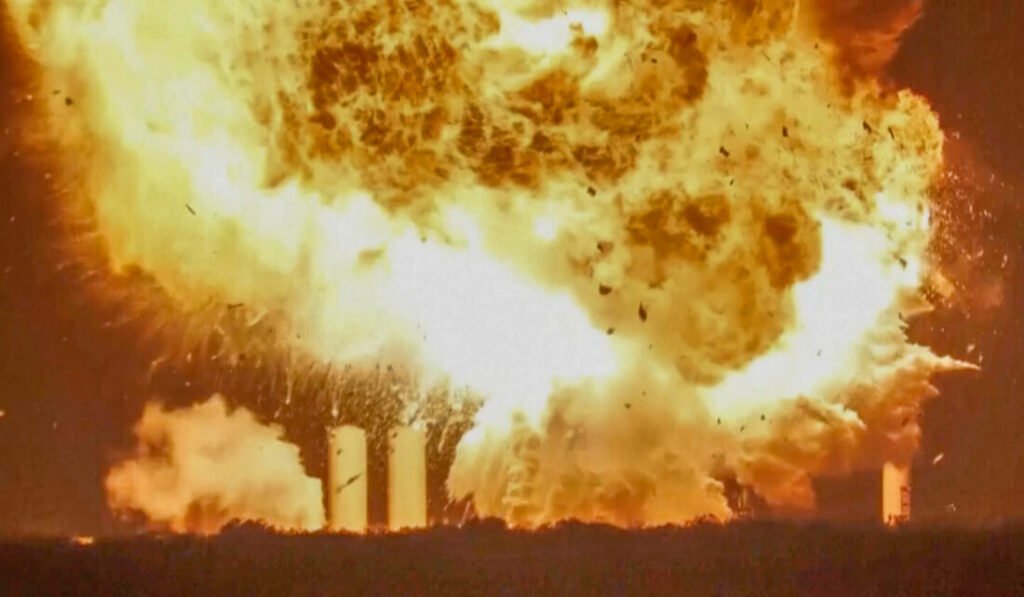
The latest widely reported incident tied to the search phrase Rocket explosion today came from SpaceX’s McGregor, Texas, test facility. According to current reporting, a blast occurred during testing of the company’s new Raptor engines for Starship Version 3 after an anomaly developed during the second engine test of the day. No injuries were reported, and the event was described as part of routine testing in a program that pushes hardware to its limits.
That detail matters because it changes how the story should be read. A test explosion does not automatically mean a launch program is collapsing. In aerospace development, stress testing is designed to reveal weak points before a vehicle flies with greater risk. The public image may be a dramatic fireball, but the engineering value can be substantial if the test helps teams understand how the system behaves under extreme conditions. SpaceX has followed this pattern before, with earlier Starship-related failures and explosive setbacks that still produced data for later flights.
Why Rockets Explode
At a basic level, rockets work by releasing energy in a controlled way. A rocket engine burns propellant, creates hot high-pressure exhaust, and pushes that exhaust backward to generate thrust forward. If pressure rises too fast, fuel mixes incorrectly, a valve fails, a sensor lies, or a structural component breaks, the controlled system can become uncontrolled very quickly. That is when flames, fragments, or an explosion can happen.
A rocket can explode for many reasons. A tank may rupture under pressure. An engine may ignite in the wrong sequence. A guidance system may send bad commands. A fuel line may leak. A stage separation event may occur too early or too late. A small hardware flaw can become a large failure because rockets are extreme machines: they handle cryogenic propellants, intense vibration, rapid temperature changes, and enormous mechanical stress all at once. In other words, a rocket is not just a vehicle; it is a carefully balanced chain of systems that must all work together in a very narrow window.
Engine and Fuel System Failures
The engine is often the most sensitive part of the system. If combustion becomes unstable, the engine can overheat, fracture, or self-destruct. Fuel and oxidizer systems can also cause trouble if they do not mix properly or if a valve opens at the wrong time. In high-performance rockets, even a small mistake in pressure or timing can lead to a major event.
Pressure and Structural Problems
Rocket tanks and plumbing operate under extreme conditions. They must hold propellant safely while the vehicle shakes, flexes, and accelerates. If the structure is weaker than expected, pressure can tear through the system. What looks like a simple blast may actually begin as a tiny crack, a faulty seal, or a design detail that worked in the lab but failed in the real world.
Software, Timing, and Control Errors
Not every rocket incident is caused by hardware alone. Rockets rely on software for sequencing, navigation, staging, and shutdown logic. If timing is off by even a small amount, the result can be catastrophic. A rocket does not have room for improvisation. A command sent too soon or too late can turn a stable flight into a dangerous one.
Why Today’s Explosion Draws So Much Attention
A phrase like Rocket explosion today spreads quickly because it combines urgency, spectacle, and uncertainty. A rocket fireball is visually striking. It is also tied to major public interests: space travel, defense, satellite launches, science missions, and high-profile companies such as SpaceX. When something goes wrong, people want to know whether the event was routine or dangerous, and whether it will affect future missions.
This attention is amplified by the fact that space companies often share live streams, test footage, and updates directly with the public. That openness is useful, but it also means that every anomaly becomes a live public event. The moment flames appear, the internet begins guessing. Some guesses are reasonable, but many are not. The fastest way to stay grounded is to look for confirmed reporting, official statements, and clear descriptions of whether the event happened during testing, launch, or recovery.
How to Read a Rocket Incident Report
When you read a report about a rocket fire or explosion, the wording matters. “Explosion,” “anomaly,” “failure,” “breakup,” and “loss of vehicle” do not mean exactly the same thing. One report may describe a launch that ended in debris falling after liftoff. Another may refer to a static test at the pad. Another may describe a staged burn or an engine test that was intentionally pushed to its limit.
A strong report should answer a few basic questions. Where did it happen? Was it on the launch pad, in flight, or at a test facility? Were people injured? Was there damage beyond the test area? Was the event publicized by the company or confirmed by regulators? These questions help separate a serious operational emergency from a controlled development test that looked frightening but stayed within safety expectations. In the case of the latest SpaceX McGregor event, current reporting says it happened during engine testing and that no injuries were reported.
Look for Location First
The location tells you a lot. A launch site, a coastal test range, and an engine stand in an inland facility are all different environments with different risk levels and different meanings for the public.
Look for Injury Reports
No injuries does not mean no problem, but it does suggest that safety systems and separation procedures worked as intended.
Look for the Mission Stage
Was the event during a launch, a prelaunch test, or a development firing? That distinction changes the interpretation entirely.
SpaceX, Starship, and Why the Program Stays in the Headlines
SpaceX is often at the center of these stories because Starship is one of the most ambitious rocket programs ever attempted. Reuters reported in 2025 that Starship had exploded in earlier tests and that these setbacks were part of a larger development arc, while AP also reported a Texas testing explosion in June 2025 that caused no injuries. Those reports show a pattern: dramatic failures have been part of the Starship program, but so have continued test efforts and iterative improvements.
That pattern is important for understanding why Rocket explosion today is not automatically the end of a story. In modern aerospace engineering, failure can be a source of progress if the team learns the right lesson. A destroyed prototype can reveal weaknesses that would be impossible to discover in simulations alone. That is especially true for reusable rockets, which have to survive launch stresses, atmospheric heating, landing attempts, and reflight requirements. The challenge is not simply to make a rocket fly once. The real goal is to make it fly reliably, survive the journey, and be ready for the next mission.
Why Reusable Rockets Are Hard
Reusable rockets face more wear than expendable ones because they must survive repeated cycles. Heat, vibration, pressure, and landing loads all add up. A design that works once may not work twice unless every component is built for endurance.
Why Testing Never Really Ends
Rocket development is not a straight line. A successful test can lead to a new weakness being exposed in the next one. That is why aerospace teams often test in stages, revise hardware, and test again.
The Difference Between a Real Explosion and a Controlled Test Event
A lot of people see smoke and assume disaster. In aerospace, that assumption can be misleading. Some events are unexpected and severe. Others are part of intentionally harsh testing. The test stand explosion reported today at McGregor falls into the second category according to current coverage: dramatic, but within the world of prototype testing. That does not make it harmless, but it does make it more understandable.
Controlled testing is not the same as a launch failure. During a test, engineers may be trying to prove how much heat, vibration, or pressure a system can tolerate before it fails. The point is to find the limit before the vehicle carries satellites, cargo, or crew. When a test reveals a weakness, the team can redesign the part, improve procedures, or adjust the software. In this sense, a test failure can be a warning sign that prevents a more dangerous failure later.
Why This Matters to the Public
A rocket explosion is not just an aerospace story. It affects public confidence, local communities, regulators, mission planners, and the people who follow science and technology news. When a launch vehicle fails, nearby areas may face temporary safety restrictions. Airspace may be affected. Nearby residents may hear loud booms or see debris fields. Even when no one is hurt, there can still be economic, environmental, or schedule consequences.
At the same time, public interest in rocket explosions reflects something hopeful: people still care deeply about space exploration. They want new missions to succeed. They want reusable rockets to lower costs. They want ambitious goals like lunar missions, Mars planning, and satellite expansion to continue. That is why each failure feels important. It is not only a setback; it is also evidence that the next generation of spaceflight is still being built, tested, and refined.
How Journalists and Readers Should Verify a Blast Report
Because the phrase Rocket explosion today can be used loosely, verification matters. The best way to confirm a report is to check whether the information comes from a primary source, a reputable newsroom, or an official statement from the company or agency involved. If the event is tied to a launch or test, look for the exact date, the place, and the mission stage. If a clip is circulating on social media, make sure the video has been matched to the right location and time before drawing conclusions.
The most reliable updates usually include direct language about what actually happened, such as whether the vehicle was on a test stand, whether an engine was firing, or whether the craft was already in flight. Without that context, the public can easily confuse a ground test with a launch failure. That is how misinformation spreads. In the current case, the latest report ties the blast to a SpaceX engine test in McGregor and says no injuries were reported.
What a Responsible Response Looks Like
When a rocket incident happens, a responsible response has three layers. First, there is immediate safety: confirm whether anyone is hurt and whether the area is secure. Second, there is operational response: stop the test, inspect the hardware, and document the event. Third, there is long-term learning: identify the cause, update the design, and revise procedures so the same problem is less likely to happen again.
This approach is what separates mature aerospace development from reckless experimentation. Engineers do not treat a blast as entertainment. They treat it as data. That data can improve future engines, safer fueling procedures, stronger structures, and better flight termination logic. Seen this way, even a frightening headline can be part of responsible progress.
What Readers Should Take Away
The phrase Rocket explosion today is useful because it captures a real public question: what happened, and how serious is it? But the answer is never just the fireball. It depends on the stage of the mission, the site of the event, the people involved, and the official explanation. In the latest report, the event was a SpaceX engine test in McGregor, Texas, with no injuries reported, and it appears to have been part of the normal risk envelope of rocket development.
That is the simplest and most honest way to understand these stories. Rockets are built to do extraordinary things, but they are also built at the edge of what current engineering can handle. That is why tests fail. That is why explosions happen. And that is why each incident, however dramatic, can still move the technology forward.
Handling Electrical Emergencies: Why Quick Professional Help Matters — useful for readers thinking about safety, hazards, and emergency response.
Final Words
If you are following Rocket explosion today for the latest update, the key is to focus on verified reporting, not just dramatic video clips. In the current case, the reported blast was tied to a SpaceX engine test in Texas and no injuries were reported, which suggests a controlled test event rather than an unexpected public emergency.
For a broader background reference, this external page is helpful:
SpaceX Starship on Wikipedia




Leave a Reply