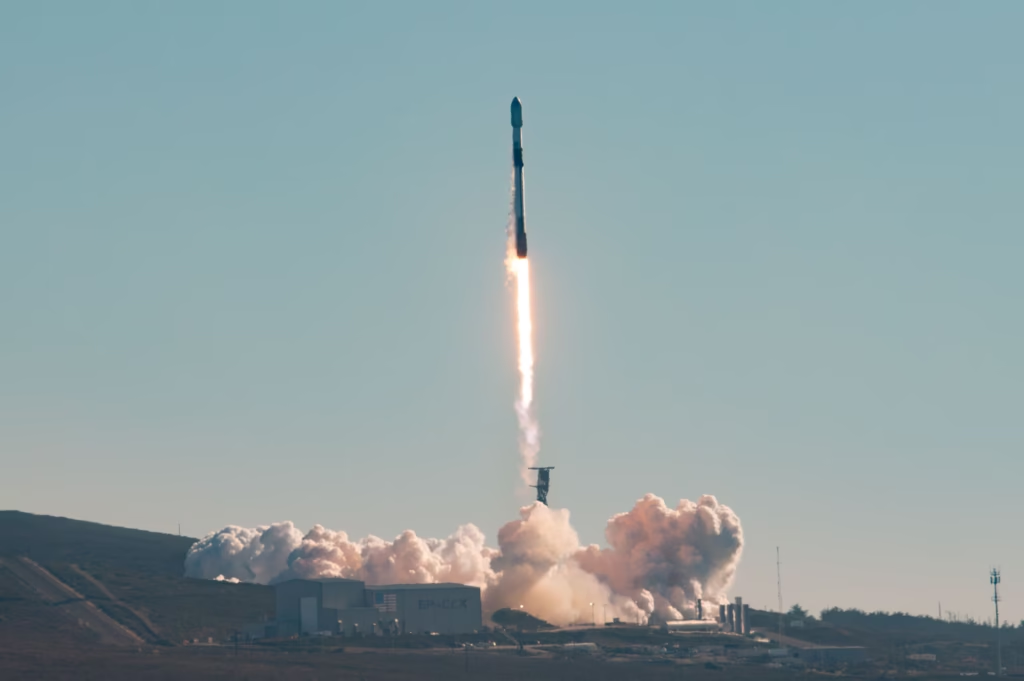
Introduction to SpaceX Launch Vandenberg Sonic Boom
The SpaceX Launch Vandenberg Sonic Boom has become a topic of intense interest among aerospace enthusiasts, scientists, and the general public. Vandenberg Space Force Base in California has been a hub for numerous space missions, particularly those by SpaceX, a company renowned for revolutionizing space travel. When a rocket is launched, the sonic boom—a loud explosive sound—is an unavoidable effect that captures attention far beyond the launch site.
This article delves into the technical aspects of the sonic boom phenomenon, why Vandenberg is a strategic launch location, and the broader implications for science, safety, and the environment.
Why Vandenberg Is Key for SpaceX Launches
Vandenberg Space Force Base offers a unique geographical advantage for polar orbit launches. Rockets launched from this site can travel south over the Pacific Ocean without overflying populated areas. This makes Vandenberg ideal for satellite deployments and research missions.
Moreover, the location allows SpaceX to safely manage the SpaceX Launch Vandenberg Sonic Boom, minimizing potential risks to nearby communities. Over time, monitoring stations have provided valuable data on how sonic booms propagate in different atmospheric conditions.
Geographic Advantages
- Proximity to the Pacific Ocean ensures safe flight paths.
- Limited population density reduces noise complaints.
- Terrain features help in dispersing sonic energy.
Launch Frequency and Types
Vandenberg hosts a variety of missions:
- Satellite launches for Earth observation
- Scientific payloads for climate and weather studies
- Commercial satellite constellations
Each launch varies in sonic intensity, depending on the rocket type, altitude, and speed.
The Science Behind Sonic Booms
A sonic boom occurs when an object travels faster than the speed of sound, creating shockwaves that merge and propagate through the atmosphere.
Mechanics of Sonic Booms
- As the rocket ascends, it compresses air in front of it, forming pressure waves.
- When these waves converge, they produce a sudden, thunderous sound—the sonic boom.
- The intensity of the boom depends on the rocket’s size, speed, and flight trajectory.
Measuring Sonic Booms
Modern sensors at Vandenberg capture sonic boom data, allowing engineers to:
- Evaluate structural impacts on buildings
- Study atmospheric effects on sound propagation
- Optimize future rocket designs
These measurements help reduce unwanted effects and improve public safety.
Ways to Increase Social Media Engagement for New Brands – Highlights community communication tactics, relevant to informing residents about launches.
Notable SpaceX Launches from Vandenberg
Over the years, several SpaceX missions have produced remarkable sonic booms, capturing media attention and scientific interest.
- Starlink Satellite Deployments – Regular launches to expand SpaceX’s global internet network.
- NASA Earth Observation Missions – Launches focusing on climate research.
- Commercial Satellites – Deploying payloads for companies worldwide.
Each event demonstrates the power and precision of modern aerospace technology, highlighting both excitement and responsibility in managing sonic booms.
Top Digital Marketing Strategies for Startups and Small Businesses in 2026 – Useful for understanding tech adoption.
Environmental and Community Impact
Although sonic booms are visually and audibly striking, they also raise environmental and community considerations.
Human Perception
- Sonic booms can startle residents and wildlife, causing temporary disturbances.
- Communities near Vandenberg are often informed in advance, allowing for precautionary measures.
Wildlife Considerations
- Birds and marine life may react to sonic disturbances.
- Studies help mitigate negative ecological impacts, maintaining balance with ongoing missions.
Future of SpaceX Launches and Sonic Boom Management
SpaceX continues to innovate in reducing sonic boom intensity. Advanced rocket designs and flight path optimization can significantly lessen atmospheric shockwaves.
- Boomless Cruise Technology – Experimental trajectories aimed at minimizing ground-level noise.
- Reusable Rockets – Reduce environmental footprint and improve launch efficiency.
These advancements indicate a promising future where space exploration and public safety coexist.
How Real Estate Apps Fuel the Digital Property Boom – Insights into technology deployment strategies.
Conclusion
The SpaceX Launch Vandenberg Sonic Boom represents the fascinating intersection of aerospace innovation, environmental management, and community awareness. Understanding the science and impacts of sonic booms ensures safer and more sustainable space exploration. As SpaceX continues to advance its technology, both enthusiasts and local communities can expect more refined launches with minimized disturbances, paving the way for a new era in human spaceflight.
SpaceX Wikipedia Page – Detailed information on SpaceX’s missions and technology.




Leave a Reply