Introduction
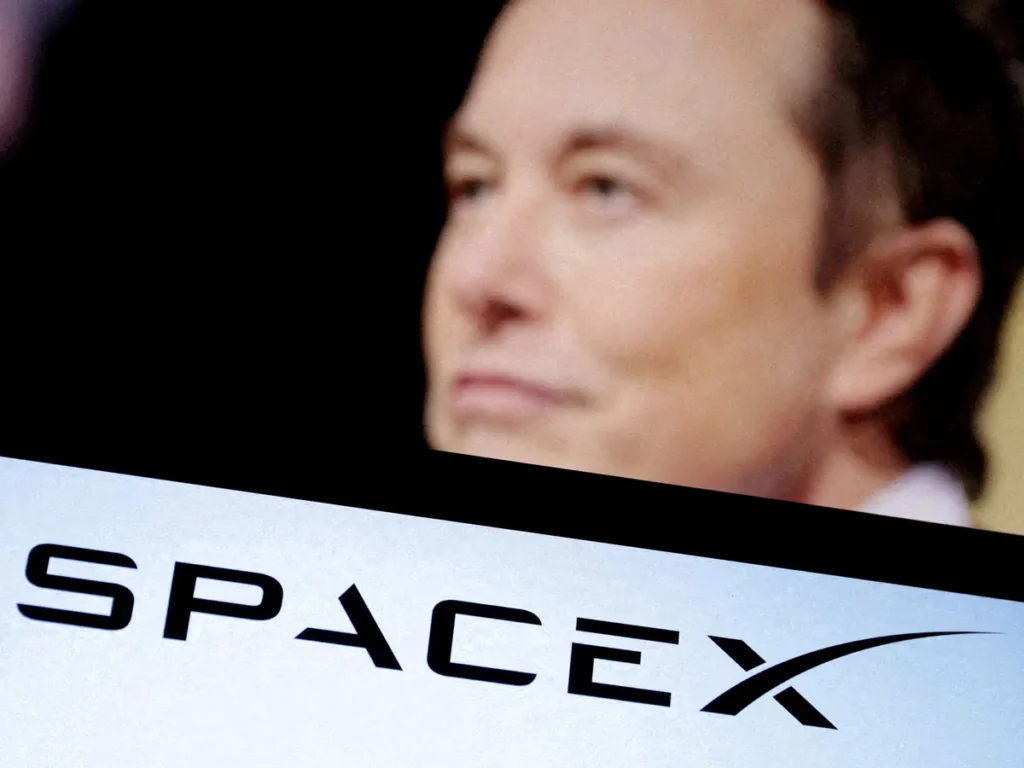
Spacex ownership is one of the most searched topics around the company because it is not just about who holds shares. It is also about who makes decisions, who has voting power, and how much control one founder can keep even in a company that is worth hundreds of billions of dollars. As of recent reporting in April 2026, SpaceX remains private, and public sources consistently place Elon Musk’s stake at roughly 42% to 43% of equity, with about 78% to 79% of voting control. Reuters has also reported that SpaceX is moving toward a major IPO, which makes the ownership question even more important today.
That matters because a private company can be run very differently from a public one. In SpaceX’s case, the founder’s control appears to be far more powerful than the simple equity percentage suggests. That is the core idea behind Spacex ownership: the real story is control, not only share count.
What SpaceX ownership really means
When people ask who owns SpaceX, they often expect a single name and a simple answer. The reality is more layered. SpaceX is a private company, so its full cap table is not publicly detailed in the way a listed company’s shareholder register would be. What is clear is that Elon Musk is the founder, chief executive, and the dominant controller of the company, while outside investors and employees also hold stakes. Public reporting has repeatedly emphasized that his equity and voting power are not the same thing.
That difference between equity and control is crucial. Equity means how much of the company’s value belongs to someone. Voting control means how much power that person has over major decisions. In many founder-led companies, those two figures can diverge sharply. SpaceX is a textbook example of that structure.
Who controls SpaceX today
Elon Musk’s role
Musk is the central figure in SpaceX’s ownership story. Public sources identify him as the founder and owner with roughly 42% to 43% of the company’s equity, while also holding super-voting control that gives him about 78% to 79% voting power. That means he can remain in command even without owning a majority of the shares.
That control structure helps explain why SpaceX has been able to move quickly on bold projects such as reusable rockets, commercial crew operations, and Starlink expansion. Founder control can reduce the friction that sometimes slows large public companies, where multiple shareholder groups, quarterly reporting pressure, and board politics can shape every strategic move.
Why the rest of the cap table is harder to see
SpaceX has been funded through many rounds over the years, which means the company’s ownership is spread across more than one stakeholder group. Still, the exact distribution is not fully public. Private-company ownership tables are usually kept confidential, and SpaceX is no exception. What can be said with confidence is that Musk remains the decisive power center even as other investors participate in the company’s growth.
That is why Spacex ownership is best understood as a control system, not just a list of names. Some people own part of the value. One person appears to control the direction.
Why equity and voting power are not the same
A lot of confusion comes from assuming that ownership automatically means decision-making power. In public markets, those two are often related but not identical. In founder-led private companies, the gap can be even wider. SpaceX appears to use that gap strategically. Musk’s voting control allows him to guide long-term projects that may take years or even decades to pay off.
This matters because SpaceX is not a company built around short-term convenience. Its business model depends on massive engineering programs, heavy capital spending, and patient execution. Rocket development, launch infrastructure, and satellite broadband all require long timelines. A structure that protects founder control can be useful when leadership wants to stay committed to difficult goals rather than chase quick results.
How SpaceX became structured this way
Early founder-driven growth
SpaceX began as a founder-led mission, and that culture still shapes the company. Public histories identify Musk as the founder and SpaceX as a private aerospace company that grew by combining technology ambition with repeated capital raises. Over time, each financing round diluted ownership somewhat, but not enough to remove Musk’s central authority.
Private-company flexibility
Remaining private gave SpaceX room to make decisions that public investors might have resisted. It could put resources into reuse, launch cadence, crewed flights, and Starlink expansion without facing the same pressure that a listed company would encounter every quarter. That flexibility is a major reason founder control has remained important.
Why SpaceX ownership matters for strategy
Starlink is a major part of the story
Ownership is not only about legal control. It shapes how a company allocates capital. Reuters has reported that investor enthusiasm around SpaceX is closely tied to Starlink, which it described as having more than 10 million subscribers in April 2026 reporting. That kind of scale helps explain why SpaceX’s valuation is so high and why the ownership question matters to investors, employees, and market watchers alike.
A business with a fast-growing satellite internet arm has different priorities from a pure launch-services company. Starlink changes the valuation logic, the revenue mix, and the long-term case for control. In practical terms, that means Spacex ownership is tied to more than rockets; it is tied to one of the most valuable internet infrastructure plays in the world.
Starship and the long game
SpaceX’s Starship program is another reason the ownership structure matters. Large, experimental programs are expensive and unpredictable. A founder with strong control can keep backing a project through setbacks because the company is not forced to justify every step to public shareholders right away. Reuters and other outlets have reported that investors still see SpaceX as a high-growth, high-belief company because of that long-term roadmap.
What an IPO could change
More transparency
If SpaceX completes the IPO path now being reported by Reuters, the company will likely have to disclose much more about its finances, governance, and risk factors. That means the ownership picture would become easier to read, at least for public shareholders. Right now, much of the real detail remains private.
Possible shifts in control
A public listing does not automatically erase founder control, but it can create pressure for better governance and more accountability. If SpaceX sells shares broadly, it may need to balance founder vision with public-market expectations. Even so, recent Reuters reporting suggests that Musk may still try to preserve strong influence, including discussion of an unusually large retail allocation in the IPO.
New access for employees and investors
A public listing could also make SpaceX ownership more visible and more liquid for employees and early backers. That would change how people think about the company. Instead of a private cap table understood by insiders, ownership would become a subject of public debate, valuation tracking, and shareholder reporting.
Strengths of the current ownership model
The main strength of the current structure is speed. A founder who controls the company can keep moving without waiting for broad shareholder approval on every strategic shift. That is especially useful in a business like SpaceX, where engineering, launch reliability, manufacturing, and satellite deployment all require coordinated execution.
Another strength is continuity. Long-term missions need leaders who can stick with them. SpaceX has shown that it can pursue ambitious work over many years, and a stable control structure helps reduce the chance of strategic drift. That is one reason many observers view founder control as part of the company’s advantage.
Why Mark Zuckerberg Stopped Talking About the Metaverse in 2026 — useful for understanding how founders steer large tech visions.
Risks of the current ownership model
The same structure that creates speed can also create concentration risk. When one person has such a large say, the company becomes heavily dependent on that person’s judgment, priorities, and temperament. If the founder’s vision changes, the entire company can shift with it. That is a real concern in any tightly controlled business.
There is also the challenge of minority investor expectations. Investors may be comfortable with founder control during growth, but tensions can emerge if governance becomes too opaque or if the company’s direction seems too dependent on one personality. That tension becomes even more important if the IPO proceeds and outside shareholders gain a bigger voice.
What readers should remember
The simplest way to think about Spacex ownership is this: Elon Musk appears to own a large minority of the equity, but he controls far more than his share percentage suggests because of voting power. That separation between ownership and control is what makes SpaceX unusual, and it is why so many people keep asking the same question in different forms.
The second thing to remember is that SpaceX is changing. With IPO reporting in the news and Starlink already operating at scale, the company is no longer just a private rocket maker. It is a major aerospace, satellite, and communications platform whose ownership structure will matter even more if it enters public markets.
Handling Electrical Emergencies: Why Quick Professional Help Matters — the article’s related-articles area includes SpaceX Starship coverage, making it a useful site hub for related reading.
Final thoughts
SpaceX is a rare company where the ownership story is also a strategy story. The founder’s control appears to have helped the business move fast, stay focused, and pursue huge goals without being pulled off course by short-term pressure. That has advantages, especially in a capital-intensive industry where patience matters. At the same time, the same structure raises questions about transparency, succession, and how the company would behave once public shareholders enter the picture.
So when people search for Spacex ownership, they are really asking a bigger question: who gets to shape the future of one of the world’s most ambitious companies? Right now, the answer is still clear. Musk remains the central controller, even as the company’s next chapter may bring new investors, more disclosure, and a very different level of scrutiny.
For a broader overview of the company, see SpaceX on Wikipedia.



Leave a Reply